
What is TURNOVER RATE?Updated 2 months ago

What is Measured:
- Turnover Rate is measured in strides per minute (spm).
- It's looking at the rate of right–left foot turnover.
- Note: Turnover Rate refers to how quickly a skater turns their feet over, not to giving up possession of the puck.
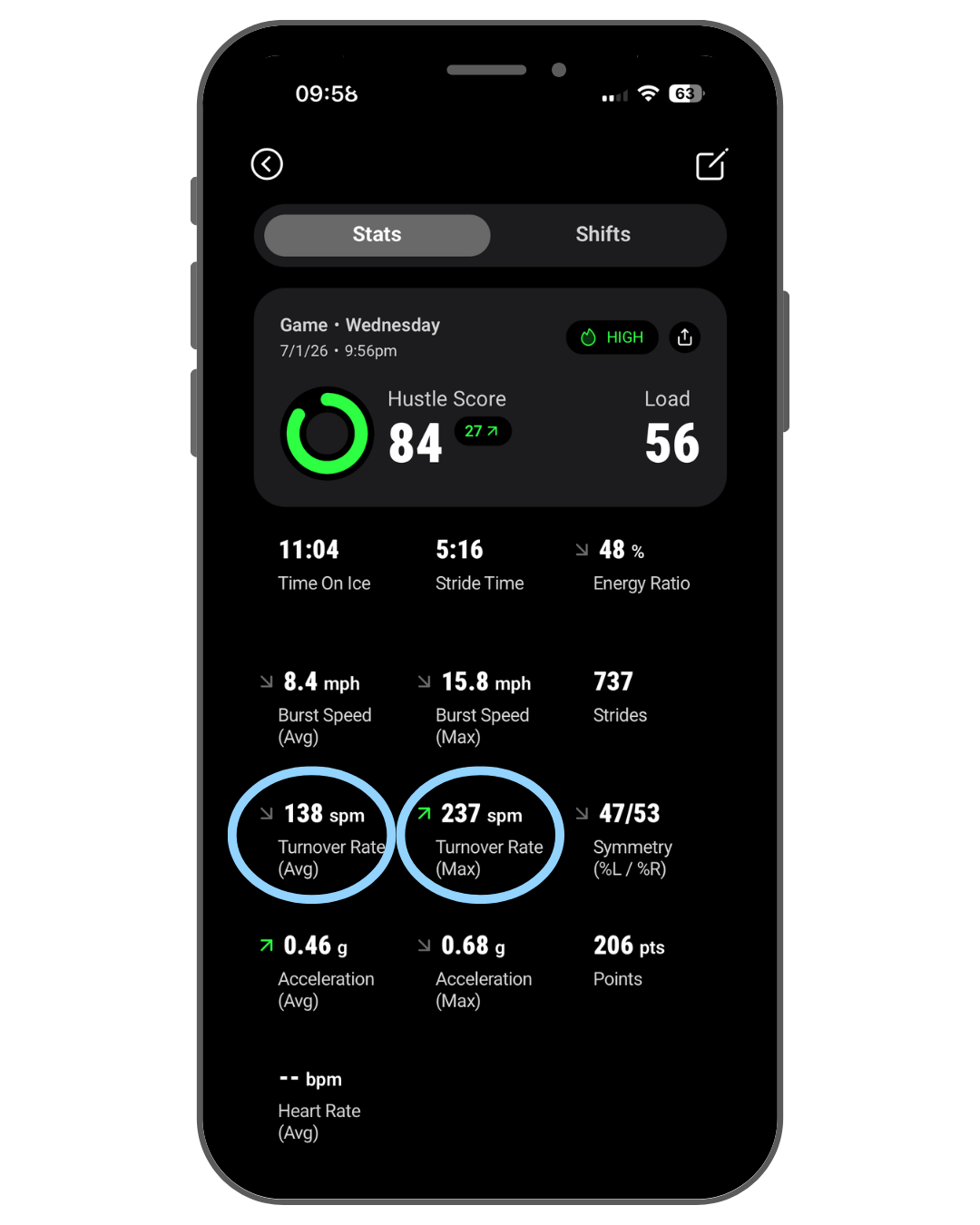
What it Tells You:
- How quick a player’s feet move.
- It's an indicator of lateral mobility, crossovers, and skating comfort.
Reading the Metric:
- High Turnover Rate (high spm): quick feet with frequent strides.
- Low Turnover Rate (low spm): slow, heavy feet with crossover difficulty.
Quick Feet ≠ Fast Skating:
- A high Turnover Rate does not always mean efficient or fast skating. Short choppy strides can artificially inflate spm without improving skating.
- A common misread is that quick feet are often mistaken for speed.
- It’s important to view Turnover Rate in conjunction with Acceleration. For example: High Turnover Rate + Low Acceleration
- More strides from A →B
- Higher energy cost, faster fatigue.
- Inefficient skater
How to Use It:
- Monitor progress: keep your eye on trends across the month, season, and all-time to effectively track improvement.
- Pinpoint inefficiencies: within skating technique, look for mismatches such as a HIGH Turnover Rate paired with LOW Acceleration and LOW Burst Speed.
- Implement specific training: focus on foot speed drills during practice and utilize agility/ladder drills during off-ice sessions.