What is the HUSTLE SCORE?Updated 2 months ago
What is Measured:
- Hustle Score is measuring the intensity of each session vs. your personal baseline metrics.
- Hustle Score is looking at how hard and consistently a player is working on the ice. Not just the bursts, but over the whole session.
- It blends effort, work rate, and sustained intensity to give a clearer picture of how hard a player worked.
- For example: Player A gets a 22 Hustle Score and Player B gets a 52 Hustle Score. This is to be understood that Player B hustled more relative to their individual baseline than Player A. Hustle Score is not an absolute metric, but wholly relative to individual player performance and baseline data.
What It Tells You:
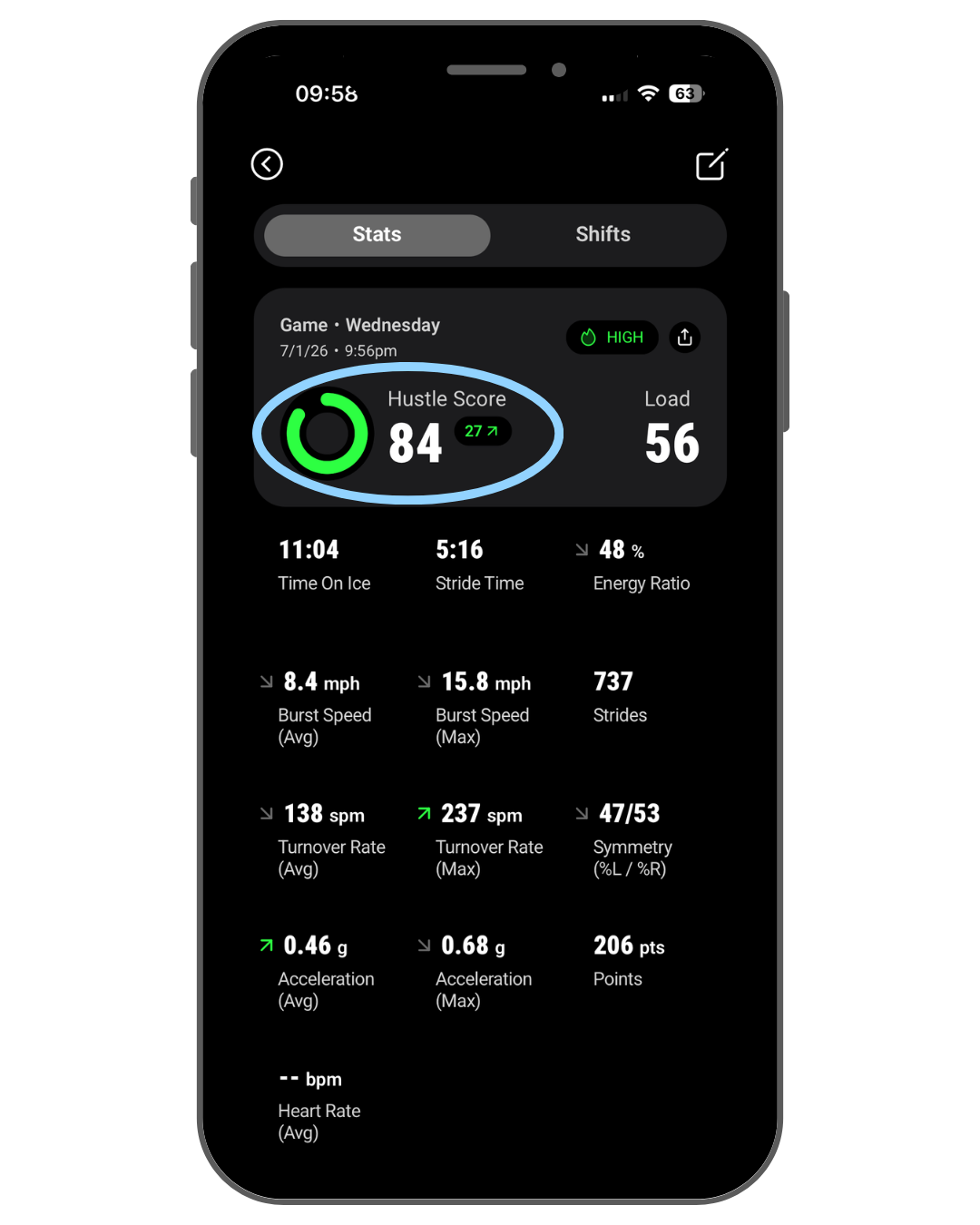
- Hustle is a 1–99 score based on the last 3 months of practice & game data.
- It’s an indicator of overall work rate and compete level.
- It is always recalibrating to your data. There’s a moving baseline with each new session.
- Separate baselines for games vs. non-games.
Why Coaches Use It:
- Removes guesswork around effort.
- Creates honest, objective accountability.
Primary Drivers:
Hustle Score is driven by three main factors:
- Load/Minute (high work rate).
- Acceleration (quick starts).
- Turnover Rate (feet moving).
Why it Matters:
- The Hustle Score measures how hard and how consistently a player is working on the ice over the whole session. If Load is the measure of total work on ice, then Hustle Score is the intensity of that volume.
How to Use:
- Reality vs. Perception: Hustle Score helps pressure test a player's feeling “they worked hard” versus objective data. Use it as a guide to align objective, measured effort against perceived effort.
- Consistency and Improvement Over Time: Look for upward trends that show improving Hustle Scores across multiple sessions. As a player’s baseline Hustle improves, incremental improvements will take longer.
- Drops or Plateaus: If Hustle Scores drop or are lower than what’s normal for the player, it might mean fatigue, lack of focus, or recovery needs attention. Consider recovery strategies (stretching, light skate, extra rest) rather than pushing through. NOTE: A player may get a low hustle score if the coach designs a practice that is intentionally a slow, recovery-based session. This does not mean the player didn’t work hard, it means they met the moment of the practice, which was at an intensity lower than their typical practice.
- Track “Effort Resilience”: Over a season, if the player can maintain or increase Hustle Scores (without burning out), that’s a sign of growing fitness, mindset, and consistency.
Where to Find:
Share to Social:
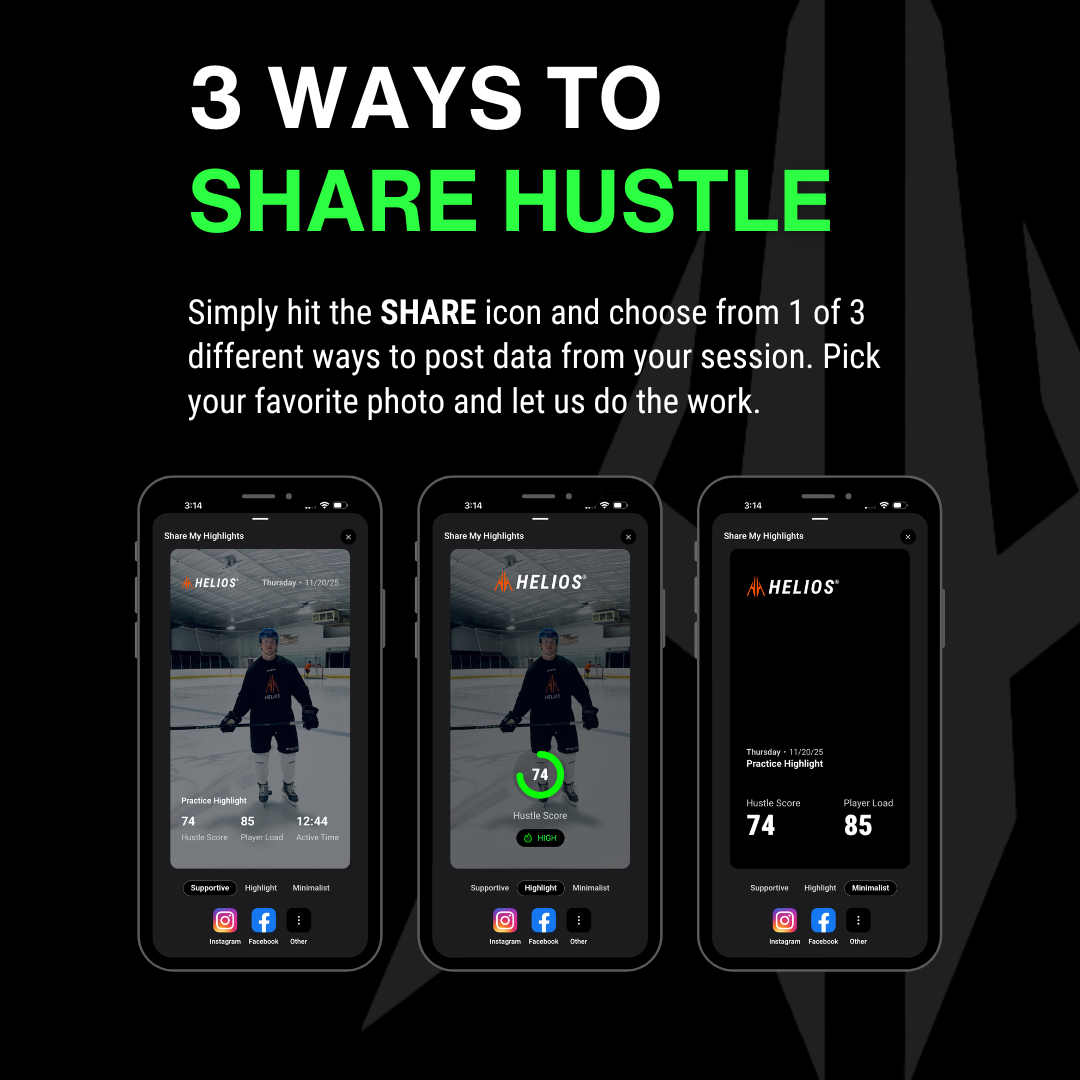
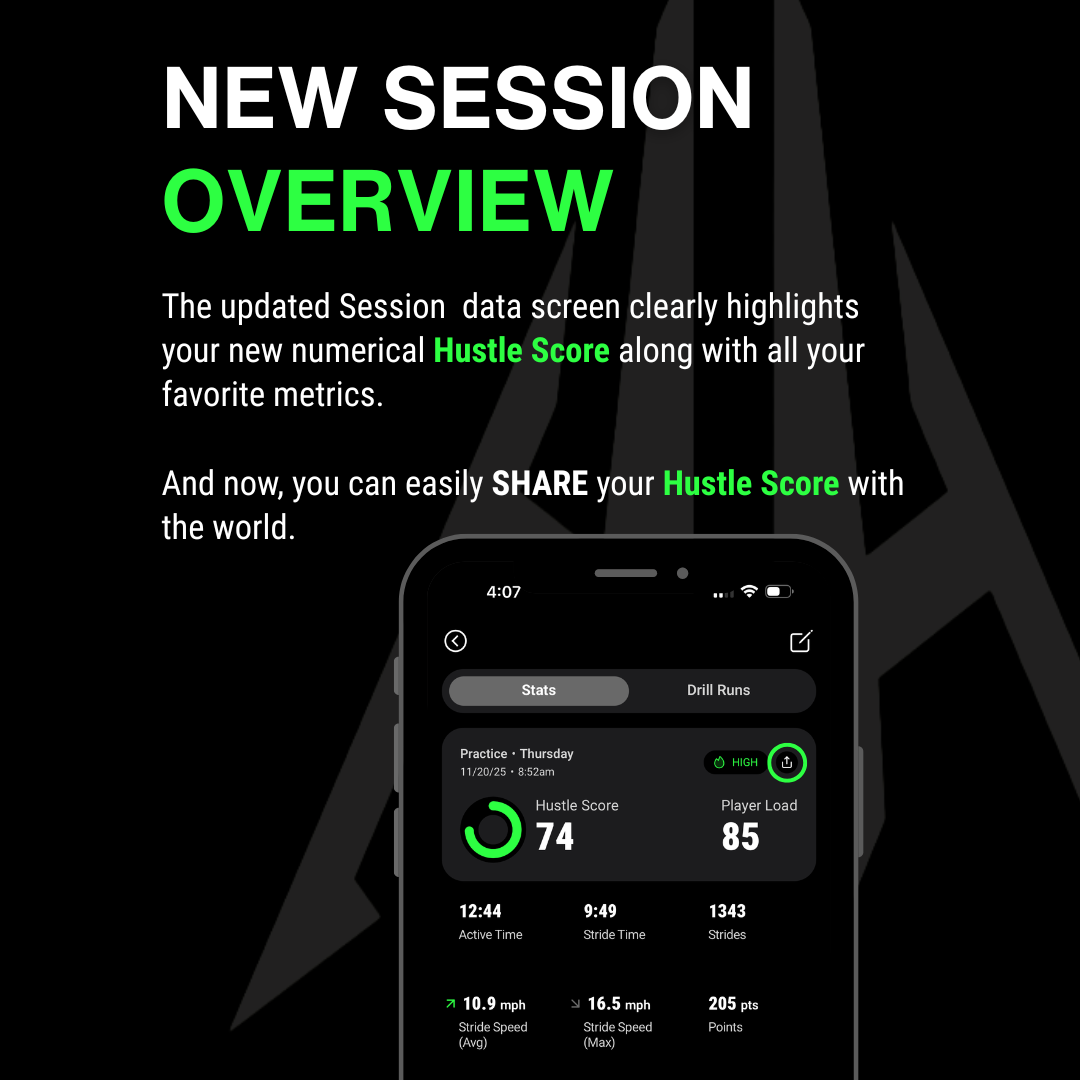
- Share your Hustle Score and a photo to social media! It’s an engaging way to showcase your progress and player development.