
What is STRIDE SPEED?Updated 3 months ago

What is Measured:
- Speed is measured in MPH (or KPH). In hockey, speed is about bursts, not straight-line racing.
- HELIOS measures Speed Bursts which are short, game-like skating efforts.
- HELIOS does not track continuous speed like GPS or laser/speed gates.
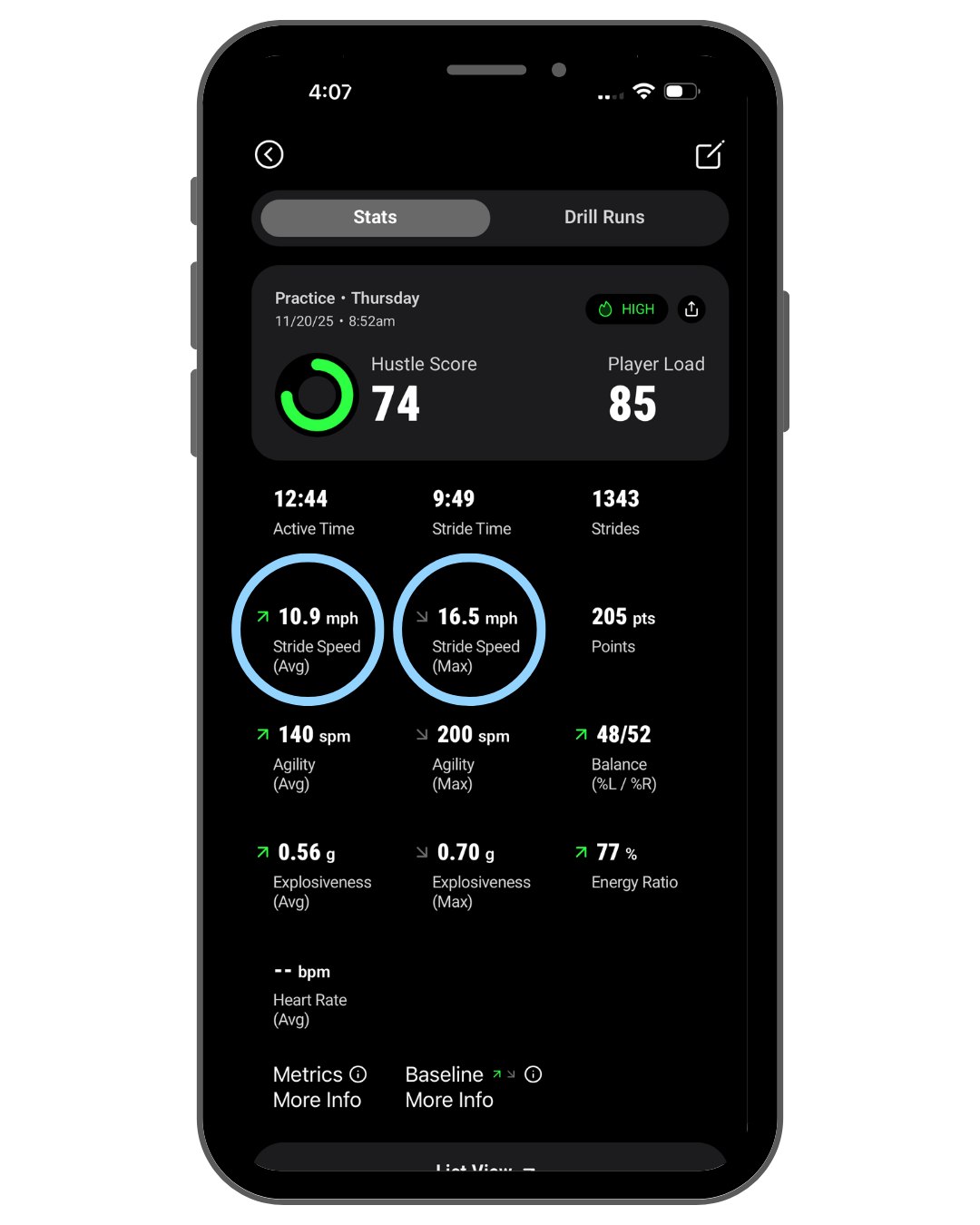
Average Speed: the average of all speed bursts in a session.
- Good indicator for overall pace of play.
- Best metric for tracking speed and development overtime.
Max Speed: the single highest speed reached in a session.
- Highly situational. For example:
- One player has an opportunity to break free on a breakaway one game, and hits a high speed. The next game, the player doesn't have that opportunity. It doesn't mean the player got slower, it just means they didn't hit a high speed instance in the game.
- One player has an opportunity to break free on a breakaway one game, and hits a high speed. The next game, the player doesn't have that opportunity. It doesn't mean the player got slower, it just means they didn't hit a high speed instance in the game.
- Not always indicative of the fastest or most effective skater.
- One player may win a race skating goal line to goal line. However, real game environments are not straight line racing. Some players slow the game down intentionally, while some players overthink during games and their feet stop moving.
Why Speed is Difficult to see from the "Eye Test" point of view:
- Visual bias impacts speed assessment.
- Fast feet ≠ fast skater.
- Lateral quickness ≠ linear acceleration.
- Speed is a result — not a single trait.
- It’s produced by multiple skating factors working together.
Why it Matters:
- Hockey is not speed skating around a track.
- Game speed happens in repeated bursts and intervals.
- Speed Bursts measure how fast the skater is skating and helps assess how well they are building raw skating ability and stamina over time.
- Prioritize Average Speed, not one-off top speeds. Use Average speed to monitor the pace of play and max speed for speed specific training.
How to Use It:
- Look at the overall trend: Over weeks and months, you should see steady gains in both average and peak speed. NOTE: Over the course of a full season, it's not uncommon for speed to decrease due to stamina decreasing and players being tired. This is especially true if coaches are not properly monitoring workload and optimizing for training. Generally, though, speed development should increase.
- Identify a speed drop in later periods/shifts: If speed in the 2nd or 3rd period (or later shifts) drops significantly, this suggests fatigue or conditioning gaps.
- Session-to-session comparison: If one session (or drill) is similar to another, but the speed metric is lower, that may point to overall fatigue, a rough surface, or lack of rest.
- Relative performance among peers: Remember, it’s one data point in the overall performance profile. Keep working on personal development and the results will come.