
What is PLAYER LOAD?Updated 3 months ago

What is Measured:
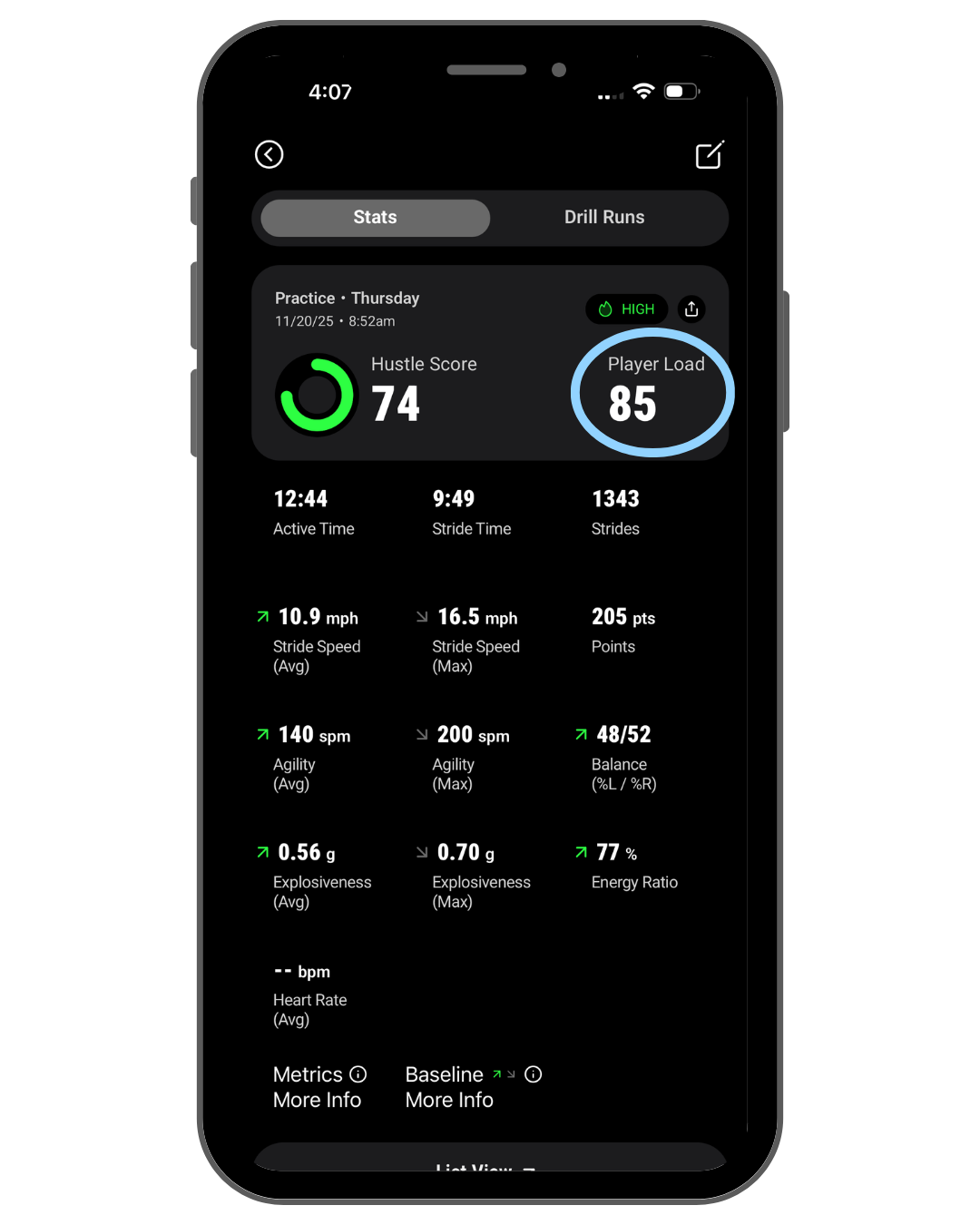
- Player Load is measuring total work performed on the ice.
- Movements (e.g. Skating, Shooting, Body Checks, etc.) in all directions (Forward, Sideways, Upwards) from the Core sensor accelerometer.
- Instantaneous Player Load for each sampling window.
- Cumulative Player Load for each skating interval, shift, drill run and session is calculated as:

Why it Matters:
Player Load tells you how much work a skater is doing on the ice, not just in a single drill, but in total (skating, shooting, checking, etc.). Keep an eye on what average load is for games and practices. It helps you see how much work is being put on their body, when they might need rest, and whether training is balanced over time.
How to Use:
Manage Training Volume and Fatigue:
- Monitor Trends: A continuous increase in Player Load without planned rest can lead to overtraining or fatigue. Look at weekly and monthly trends to ensure balance.
- Intentional Rest: Schedule rest days deliberately. After high-load days, limit additional dry-land training or prioritize active recovery (light skating, stretching) to allow for muscle repair and adaptation.
- The Power of Rest: Lower load days or weeks are critical for recovery and adaptation—this is when fitness gains are solidified.
Optimize Practice and Game Preparation:
- Compare Session Intensity: If two practices are the same length but one has a significantly higher Player Load, that session was more intense and may require extra recovery time.
- Pre-Game Tapering: Use load data in the weeks leading up to games or tournaments to slightly reduce practice intensity (taper). This ensures the skater is sharp and rested, not sore, for the event.
Track Progress and Flag Concerns:
- Celebrate Fitness Gains: Over a season, if your skater can handle gradually increasing Player Loads without extra soreness or fatigue, it's a clear sign of improved fitness.
- Identify Red Flags: Be vigilant if Player Load spikes suddenly or remains high for multiple consecutive weeks. Watch for signs of fatigue, soreness, or a drop in on-ice performance (e.g., slower reactions, less explosiveness on starts).