
What is ACTIVE TIME / STRIDE TIME?Updated 3 months ago


HELIOS tracks every stride to measure how players spend their time on the ice. Knowing how much ice time each player has is important, but understanding what they did during that ice time is critical.
- The HELIOS Core Sensor sees skating strides across a session. From this data, we derive advanced Time on Ice information.
- HELIOS tracks the cumulative time spent in different types of skating across a whole session, or on a shift-by-shift and drill-by-drill basis.
- HELIOS can see the difference between high-effort skating and gliding or casual skating.
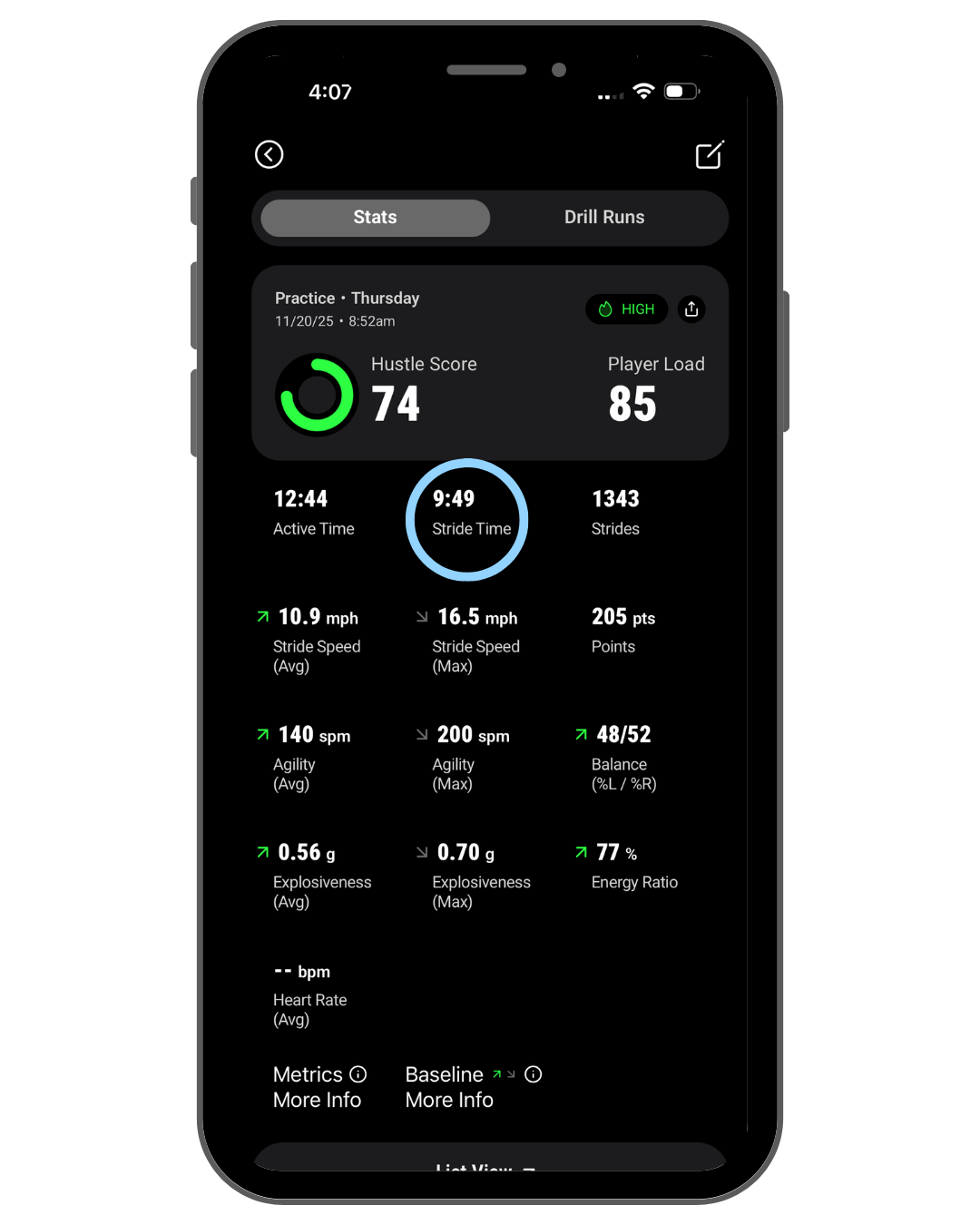
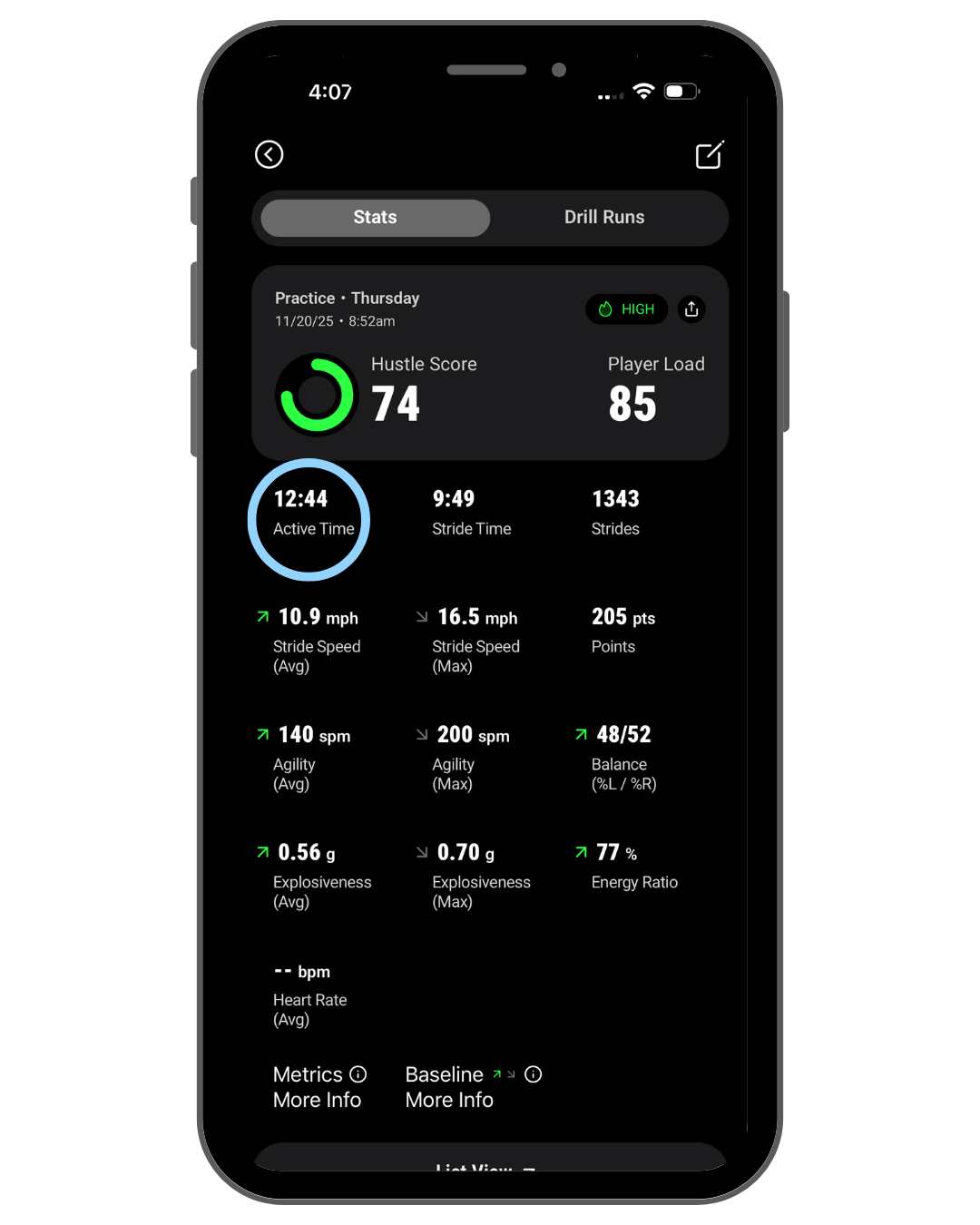
Looking at Time On Ice:
Active Time
- Active Time is the cumulative amount of time a player has in any type of skating effort.
- In a Game session, it is any amount of skating detected from the Core Sensor. We can tell when you jump off the boards and start skating to start your shift and when you get back to the bench at the end of the shift.
- NOTE: Active Time will also include any skating that happens between whistles or during warmups. For this reason, your Active Time may be higher than your game-clock official TOI (Time on Ice).
Stride Time
- Stride Time tracks the cumulative amount of time spent in high-work effort skating.
- This excludes coasting, gliding, or casual skating and is limited to instances of high-effort skating.
Energy Ratio
- % of time spent at high effort (Stride Time/Active Time).
- Higher ER% means the players were skating more.
- Lower ER% means the players were more casual or coasting.
Why it Matters
- Simply knowing a player's Time on Ice in a game doesn’t tell us anything about what the player did with their ice time. Stride Time, Active Time, and Energy Ratio creates a more robust picture of what skating was like on the ice.
- Understanding how much time players are spending truly skating then translates to Effort and Player Load data.
How to Use it
- Track Ice Time and Energy Ratio: Monitor your Active Time and Energy Ratio across games to determine when too much ice time leads to a decrease in skating volume.
- Impact of Shift Length: Track Energy Ratio against shift length to help players understand that long shifts are not helpful for sustained high levels of effort.
- Set Energy Ratio Targets: If your player is constantly falling below the recommended Energy Ratio Targets for position, or if you want skating to increase, set goals for ER% across a session.